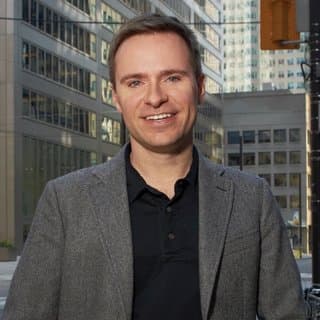
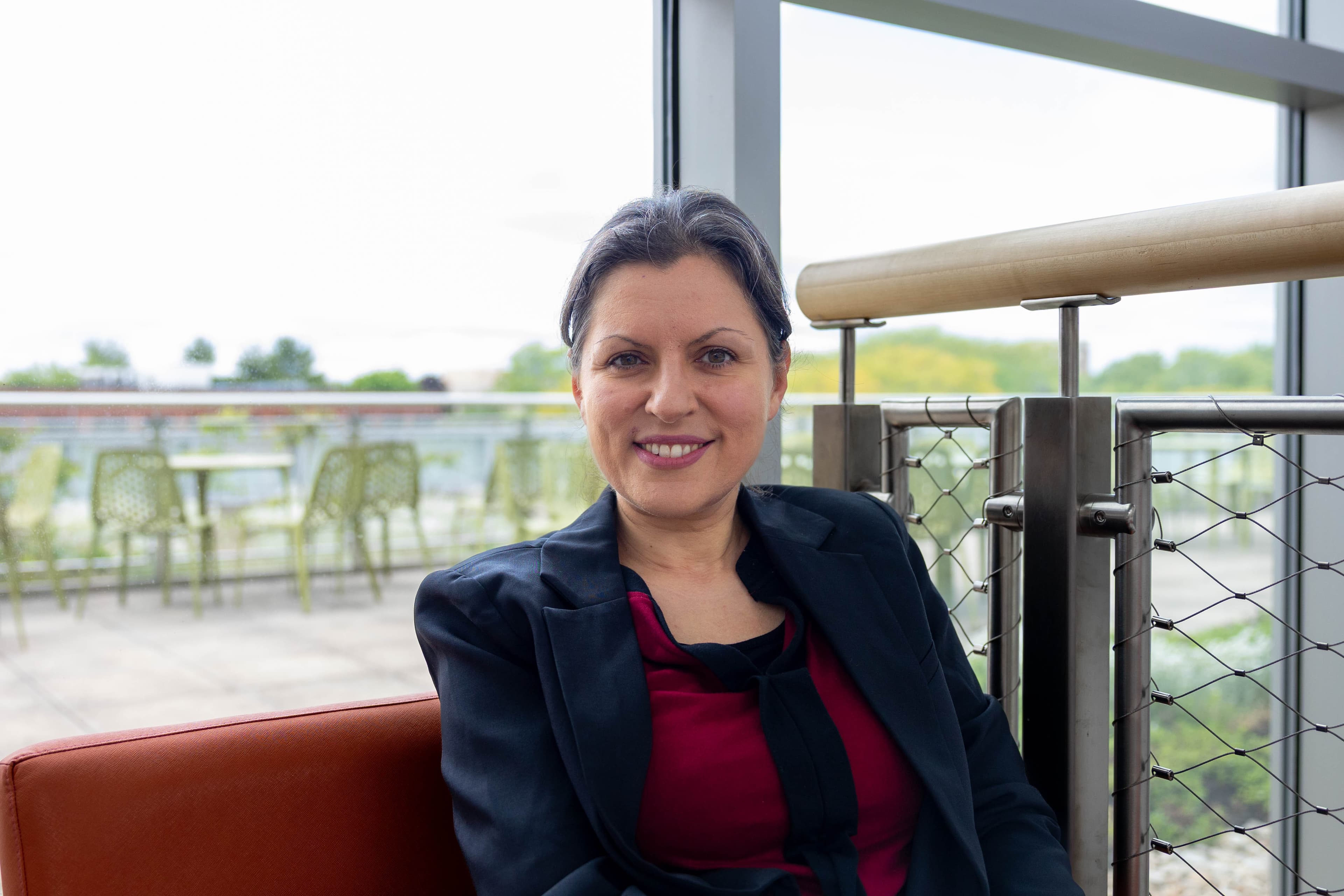
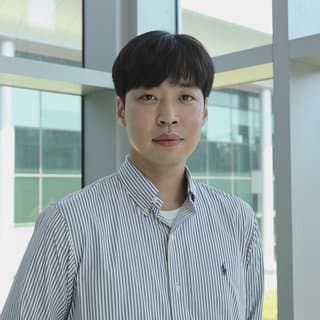
Scott Schieman
Lead Investigator
Dr. Scott Schieman is a Professor of Sociology at the University of Toronto. He studies what people think and feel about work—and how they talk about it. He is especially interested in the ways that work shapes the sense of self, status, and well-being. Since 2005, he has collected data from more than 55,000 workers in Canada, the United States, and South Korea. Drawing upon decades of quantitative and qualitative data, his research tells the story about the quality of work and economic life and their effects on our everyday lives.
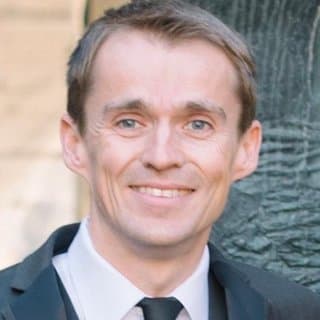
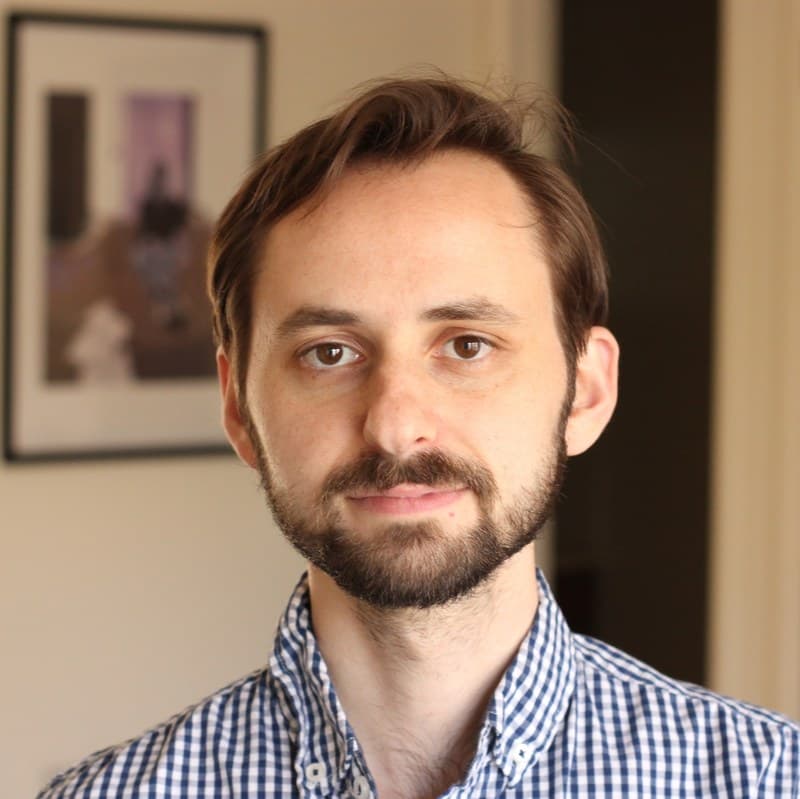
Paul Glavin
Co-Lead Investigator
Dr. Paul Glavin is Associate Professor of Sociology at McMaster University. His research examines emerging challenges to the employment and health of Canadian workers, with a focus on Canadians’ experiences in self-employment and alternative work arrangements.
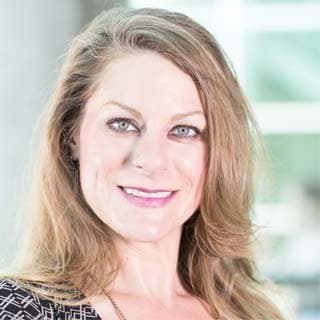
Alexander Wilson
Project Director
Alexander Wilson is a PhD candidate in Sociology at the University of Toronto. He studies how new technologies interact with work, health, and social stratification. His projects have dealt with how AI exposure shapes career transitions, how workers interpret automation as a threat to their livelihoods, and how workers defend their occupational identities from technological threat.
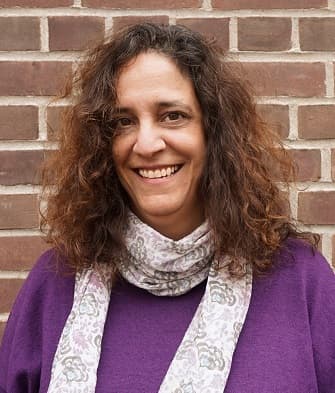
Daniel Hill
Policy Director
Daniel Hill is a PhD student at the University of Toronto in the department of Sociology. His primary research interests are based in Social Psychology and Occupational Mobility. Specifically, he is interested in the decision-making processes that workers engage in as they determine their occupational aspirations.
Marisa Young
Professor
Dr. Marisa Young is a Professor of Sociology at McMaster University. Her areas of focus are in work, family, stress, and health, and advanced quantitative methods. Dr. Young is an Early Career Fellow at the Work-Family Research Network.
Melissa Milkie
Professor
Dr. Melissa Milkie is Professor of Sociology at the University of Toronto. Her research focuses on structural and cultural changes in gender, work and family life over recent decades and how work-family configurations are linked to health and well-being. Recently she was named as one of the top-cited work-family researchers in the world by the Work-Family Researchers Network.
Philip J. Badawy
Assistant Professor
Dr. Badawy is an Assistant Professor of Sociology at the University of Alberta. His research is focused on the intersection of work and family life and the implications of these dynamics for workers’ stress and health, with a specific focus on how these processes change over time.
Cary Wu
Associate Professor
Dr. Cary Wu is an Associate Professor of Sociology at York University. His research focuses on how value orientations such as social and political trust are formed, and how these values explain structural inequality based on gender and race/ethnicity.
Quan D. Mai
Associate Professor
Dr. Quan D. Mai is an Associate Professor of Sociology at Rutgers University. His research interests focus on social inequality in the labor markets, nonstandard employment, race, and research methods. He is particularly interested in how the experience of nonstandard employment shapes various aspects of workers’ lives.
Laura Upenieks
Associate Professor
Dr. Laura Upenieks is an Associate Professor of Sociology at Baylor University. Her research focuses on religion and health, aging and the life course, and quantitative methods. One interest seeks to integrate life course models of health and social network analysis.
Atsushi Narisada
Associate Professor
Dr. Atsushi Narisada is an Associate Professor of Sociology at Saint Mary’s University. His current research examines the antecedents and consequences of justice perceptions in the workplace. His recent work on this subject has appeared in Social Psychology Quarterly, Work and Occupations, and Social Justice Research.
Alex Bierman
Professor
Dr. Alex Bierman is a Professor of Sociology at the University of Calgary. He is the wizard of all things statistical. Dr. Bierman has an extensive background in the analysis of longitudinal surveys, has repeatedly taught classes in social statistics from the introductory to doctoral levels, and frequently serves as a resource for other members.
Deniz Yucel
Professor
Dr. Deniz Yucel is a Professor of Sociology at William Paterson University in New Jersey and Co-Editor of the journal Community, Work & Family. Her research focuses on how family and work environments, the work-family interface, and flexible working arrangements affect relationship, job, and health outcomes across different unions and social contexts.
Rochelle Côté
Associate Professor
Dr. Rochelle Côté is an Associate Professor of Sociology at Memorial University. Her areas of research focus on interactions between social networks, race and ethnicity, social mobility, and mixed methods research design. Working with colleagues and community partners in Australia and New Zealand, she is currently examining the role of networks in creating opportunities for Indigenous economic, social and cultural mobility.
Max E. Coleman
Assistant Professor
Max E. Coleman is Assistant Professor of Sociology and an affiliate of the Health, Society & Policy program at the University of Utah. His research examines inequalities in mental and cognitive health from a social-psychological perspective. Dr. Coleman’s work has been published in outlets such as the American Journal of Public Health, Journal of Health and Social Behavior, and Social Science & Medicine.
Xiaowen Han
Assistant Professor
Dr. Xiaowen Han is an Assistant Professor of Sociology at Western University. Her research spans life course studies, work and occupations, social stratification and mobility, and health and aging, with a focus on quantitative methods. Her recent work uses longitudinal and causal inference methods to examine how multidimensional labor market inequality unfolds over the life course and shapes health disparities across working lives and into later life.
Jong Hyun Jung
Associate Professor
Dr. Jong Hyun Jung is an Associate Professor of Sociology at Sungkyunkwan University in South Korea. His research examines the complex interplay between religion, stress, and mental health. His recent work focuses on how religion shapes worker well-being.
Xiaozhao Yousef Yang
Associate Professor
Dr. Xiaozhao Yousef Yang is an Associate Professor at Sun Yat-sen University. His research examines how sociocultural context shapes health behaviors and health outcomes around the world. Drawing on data from China, North America, Central Asia, and beyond, his work bridges medical sociology with the comparative study of diverse populations.
Diana Singh
Adjunct Assistant Professor
Dr. Diana Singh is the Executive Director of the McMaster Centre for Advanced Research on Mental Health and Society (ARMS) and an Adjunct Assistant Professor in the Department of Sociology at McMaster University. Her research focuses on emotional labour, work, stress, and mental health, with a particular interest in the health consequences of emotion management among service workers. Her work includes community-engaged partnerships with organizations across the health and social service sectors to promote workplace well-being and healthy work environments.
Heeyoung Lee
PhD Candidate
Heeyoung Lee is a PhD candidate in Sociology at the University at Albany, SUNY. His research focuses on the temporal and spatial dimensions of health and crime inequality.
Manlin Cai
Postdoctoral Fellow
Dr. Manlin Cai is a Postdoctoral Research Fellow in Sociology at the University of British Columbia. Her research examines how work, family, and migration processes intersect to reproduce social inequality. She is particularly interested in how job authority shapes workplace relations, family life, and well-being.
Zhuofei Lu
Assistant Professor
Dr. Zhuofei Lu is an Assistant Professor of Sociology at the University of Warwick and an Associate Member of the Department of Sociology at the University of Oxford. His research examines social inequality through computational social science, with particular interests in the social stratification of generative AI, natural language processing, cultural geometry, and the use of generative models to study social and cultural representations. His broader research also focuses on gender, work and family, and time use.
Bruce Liang
PhD Student
Jiarui “Bruce” Liang is a PhD student in Sociology at Yale University. His main research interest concerns examining the role of culture in facilitating social reproduction—and conversely, social mobility—with a focus on these mechanisms in educational institutions. He uses both quantitative and qualitative methods to tackle his research questions.
Jason Park
Research Scientist
Dr. Jason Park is a Research Scientist at the Max Planck Institute for Demographic Research (MPIDR), affiliated with the Labor Demography Research Group and the MaxHel Center for Social Inequalities in Population Health. He received his Ph.D. in Sociology and Demography from the Pennsylvania State University. His research examines how sexual orientation, gender, and their intersections shape labor market, demographic, and health inequalities across the life course, primarily using quantitative methods and nationally representative data.